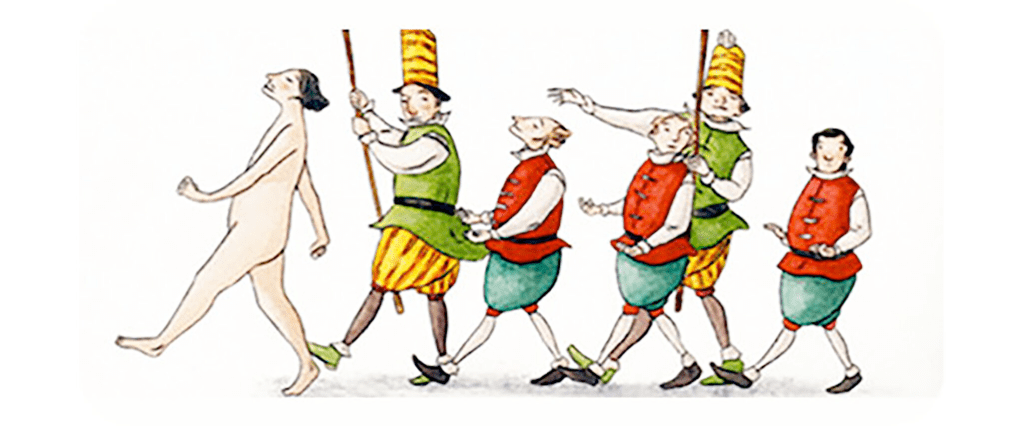
The gist of Hans Christian Andersen’s folktale is that a vain emperor is conned by a couple of weavers who claim that only an incompetent or stupid person could fail to see the magnificent clothes they had made for him. The emperor, who cannot perceive of himself as anything but competent and infallible, proceeds to lead a parade in his new outfit through streets lined by his followers who are compelled to “admire” his outfit lest they, too, are exposed as inept or stupid. It takes a child to point out that the emperor has no clothes on at all. And yet, the emperor continues to parade through the streets.
This story is an oft-used metaphor for op-eds about gullible public figures about whom we might say are “legends in their own minds,” surrounded – and often led – by people who cultivate their delusions of grandeur in order to reap benefits of proximity or to influence the “emperor” to follow their guide book.
But what do you suppose happened AFTER that observant child pointed out the bleeding obvious? In Andersen’s story, the emperor continued to lead the parade, clearly unwilling to see or admit the truth. And surely his toadies continued to follow him and cheer him on, their livelihoods and master plans dependent upon his malleable vanity and ignorance.
But what about that unruly child who refused to be duped into subservience to a ridiculous and blatantly visible lie, even though it was being touted by his elders? Were they hushed by their parents, fearing retribution? Were they taken away by the emperor’s men to be executed as a lesson to the people not to question the authority of the empire?
I like to think that at least a few of the people recognized that the child was right. The emperor WAS naked! And if the emperor was naked, and all of his followers believed he was wearing magnificent garments, then they were blind at best, but more probably motivated by evil intent. And maybe they talked to other people, and maybe the people organized clandestine meetings, and maybe a movement grew that eventually led to the overthrow of the emperor and his cronies.
And maybe – just maybe – the people of the empire realized what they had allowed to transpire by their own ignorance and disbelief and got to work to speak truth to power – to pass laws that would ensure that this kind of incompetence and stupidity, led by this kind of evil and greed, would never again be allowed to happen in their world.
___
While Old Hans was not much of a “happily ever after” kind of guy, the morals of his tales presented in easily deciphered children’s stories have reached people of all ages in ways they may not immediately appreciate. Do you know he also wrote “The Princess and the Pea,” “The Little Mermaid,” “The Ugly Duckling” and “The Snow Queen”?

 Platypus Thoughts
Leave a comment